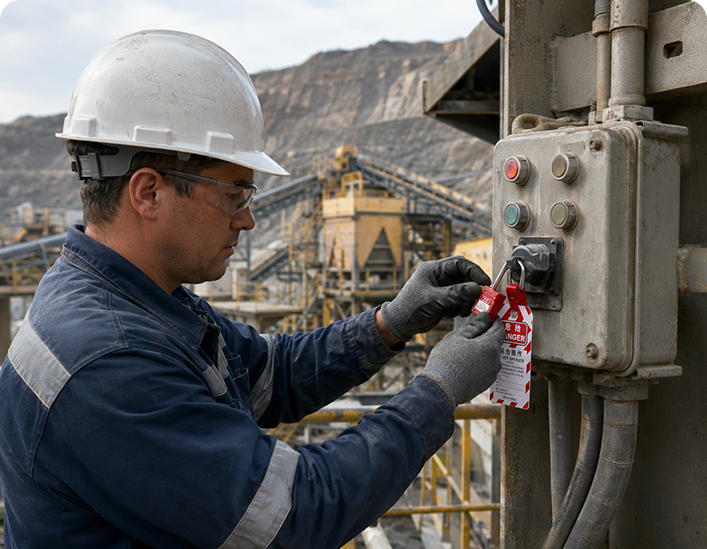
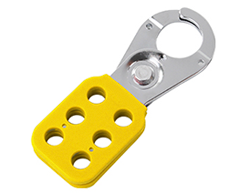
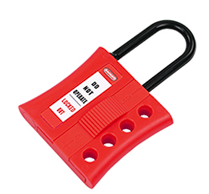
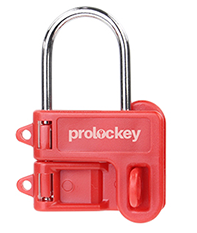
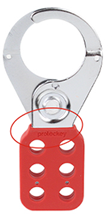
Built for lockout/tagout (LOTO) compliance, our Safety Padlock delivers reliable energy isolation that
protects workers from unexpected startup. Each lock is keyed uniquely to its authorized holder—only they can
remove it—meeting OSHA 1910.147. The non-conductive body and color-coded identification support durable,
auditable site lockout procedures across mechanical, electrical, and corrosive-environment applications.
The safety padlock is the highest-volume, most frequently used LOTO product — every breaker
lockout, every hasp, every tag is held by one — which also makes it the most
failure-prone link in the system if corners are cut.
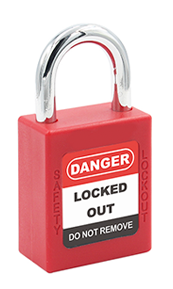
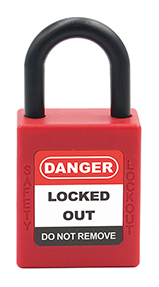
A qualified safety padlock must include:
anodized aluminum lock body (non-conductive, lightweight, corrosion-resistant),
(insulated and spark-free for electrical environments; steel-shackle variant
available for mechanical applications),
pin tumbler cylinder with three keying levels
— KD (Keyed Different), KA (Keyed Alike), MK (Master Key) for tiered worker /
supervisor access,tamper-resistant body, and laser-engraved numbering. Available in 6
to 12 colors for role / crew / department identification
— the foundation of any enterprise-level LOTO coding system.
Compliance and
Standards
In terms of compliance, it must primarily satisfy the four mandatory requirements of OSHA 29 CFR 1910.147
for locks — "durable, standardized, substantial, identifiable" — as well
as the provisions of ANSI Z244.1 for individual protective locks.
The lock body should be made of non-conductive material to meet the insulation requirements of NFPA 70E
for electrical work, and should achieve risk-level visualization through ANSI Z535 color coding.
Entering the European and North American markets requires a CE mark (based on EN ISO
14118 / EN 10377 standards for lockout devices that prevent unexpected startup);
products used in explosive atmospheres (petrochemical, mining) should also meet the
non-sparking material requirements of ATEX 2014/34/EU.
On the enterprise side, the uniqueness and traceability of key codes must be controlled under an ISO 9001
quality management system.
How is a safety padlock different from a regular padlock?
A regular padlock is for theft prevention; a safety padlock is for "accountable isolation." It features a
unique key code, non-conductive body, color coding, and a writable label window, meeting OSHA/ANSI mandatory
requirements for LOTO locks. Typically one lock comes with one (or a set of) dedicated key(s), eliminating
any risk of cross-opening.
What key-management options exist, and how do I choose?
A regular padlock is for theft prevention; a safety padlock is for "accountable isolation." It features a
unique key code, non-conductive body, color coding, and a writable label window, meeting OSHA/ANSI mandatory
requirements for LOTO locks. Typically one lock comes with one (or a set of) dedicated key(s), eliminating
any risk of cross-opening.
Why must the lock body be non-conductive?
A regular padlock is for theft prevention; a safety padlock is for "accountable isolation." It features a
unique key code, non-conductive body, color coding, and a writable label window, meeting OSHA/ANSI mandatory
requirements for LOTO locks. Typically one lock comes with one (or a set of) dedicated key(s), eliminating
any risk of cross-opening.
What is the point of multi-color lock bodies?
A regular padlock is for theft prevention; a safety padlock is for "accountable isolation." It features a
unique key code, non-conductive body, color coding, and a writable label window, meeting OSHA/ANSI mandatory
requirements for LOTO locks. Typically one lock comes with one (or a set of) dedicated key(s), eliminating
any risk of cross-opening.
How do I use the label window on the lock?
A regular padlock is for theft prevention; a safety padlock is for "accountable isolation." It features a
unique key code, non-conductive body, color coding, and a writable label window, meeting OSHA/ANSI mandatory
requirements for LOTO locks. Typically one lock comes with one (or a set of) dedicated key(s), eliminating
any risk of cross-opening.
Tell us your equipment,
hazardous-energy sources, required quantity and
customization needs.
PROLOCKEY will help identify a suitable LOTO configuration
and prepare a quotation.
 +86
133-9699-6593
 nfo@lockeysafety.com